A lumbar cushion is the long, rectangular cushion that sits in front of your square cushions. It's the piece that makes a sofa or bed look finished rather than just furnished, and it fixes a common problem: a row of square cushions that looks flat, however nice each one is on its own.
This guide covers what a lumbar cushion is, what size to buy, where it goes on a sofa, bed or armchair, and how to mix prints so the look feels considered, not cluttered.

What is a lumbar cushion?
A lumbar cushion is a long, low, rectangular cushion. The name comes from the lumbar region of your lower back, because on a deep sofa or armchair it sits right where your lower back needs a little support. In styling, it's the front layer of a cushion arrangement, adding a different shape so a row of squares doesn't look flat.
You'll also see them called long cushions, rectangular cushions, oblong cushions or lumbar pillows. They're all the same thing.
What size is a lumbar cushion?
There's no single standard size, but most decorative lumbar cushions in Australia are between 30 x 50cm and 40 x 60cm. Ours are 60 x 40cm, which sits neatly in front of a 55 x 55cm square cushion. It's wide enough to read as its own shape and low enough that the squares behind it still show.
A useful rule: your lumbar should be shorter than the square cushions behind it and a little wider than one of them. Too small and it disappears. Too tall and it hides everything behind it. For every common size side by side, see our cushion size guide.
How to style a lumbar cushion on a sofa
On a sofa, the lumbar is the centrepiece, so put it where the eye lands first.

Two-seater sofa
Two 55 x 55cm squares, one in each corner, with a single lumbar in the middle, sitting slightly forward. It's the easiest layout to get right and works on almost any sofa.
Three-seater sofa
Two squares in each corner and one lumbar in the centre seat. If that feels like too many cushions, drop to one square per corner and let the lumbar do the work in the middle.
Modular or L-shaped sofa
Treat each section as its own small arrangement. A lumbar works well on the chaise end, where a square cushion can look stiff, or tucked into the corner seat where two backs meet.
Tip: on a deep sofa, a lumbar gives your lower back support without having to sit upright against a stack of squares.
How to style a lumbar cushion on a bed
A lumbar cushion is the simplest way to make a bed look styled. It sits in front of your pillows and squares and ties the bedding together.
Queen bed
Sleeping pillows at the back, two 55 x 55cm squares in front, and one 60 x 40cm lumbar centred at the front. Five pieces in total. It looks full without taking ten minutes to clear every night.
King bed
A king bed is 183cm wide, so a single lumbar can look a little lost. Try one of these:
- Two lumbars side by side in front of two or three squares. Matching lumbars look calm and tailored; two different prints look more relaxed.
- Three squares and one lumbar, with the lumbar centred in front of the middle square.
Single or king single bed
One square and one lumbar is plenty. On a kids' or guest bed, a lumbar on its own looks neat and leaves room to sit against the wall.
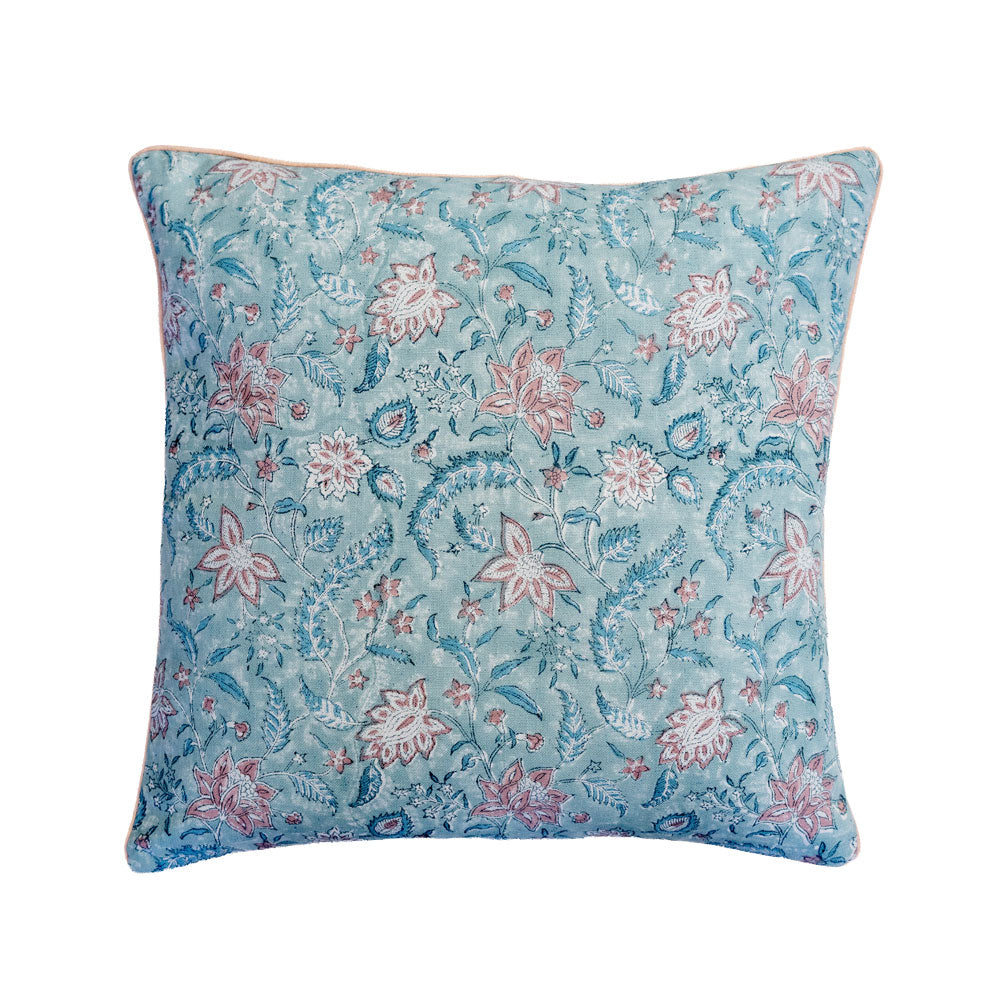
To pull the bed together, repeat one colour from your quilt in the lumbar. The Aranyani Azure lumbar sits naturally on our Aranyani Azure quilt, and works just as well against plain white or linen bedding. For more ideas, read our guide to bed styling.

How to style a lumbar cushion on an armchair
On an armchair or occasional chair, a lumbar is often a better choice than a square. It supports your lower back, leaves room to sit properly and doesn't fight the shape of the chair. One lumbar on its own is enough.
If the chair is a strong colour, choose a lumbar with a small amount of that colour in the print rather than an exact match.

Lumbars also work on benches at the end of the bed, window seats, daybeds and covered outdoor lounges: anywhere a square cushion would look too bulky.
How to mix prints with a lumbar cushion
The lumbar is the best place for your boldest print, because it's the smallest piece and sits front and centre. A simple formula that works:
- Squares in a quieter print or plain texture, such as linen or velvet, at the back.
- Lumbar in the hero print at the front.
- Repeat one colour across both, so they look chosen together.

Some pairings from our range:
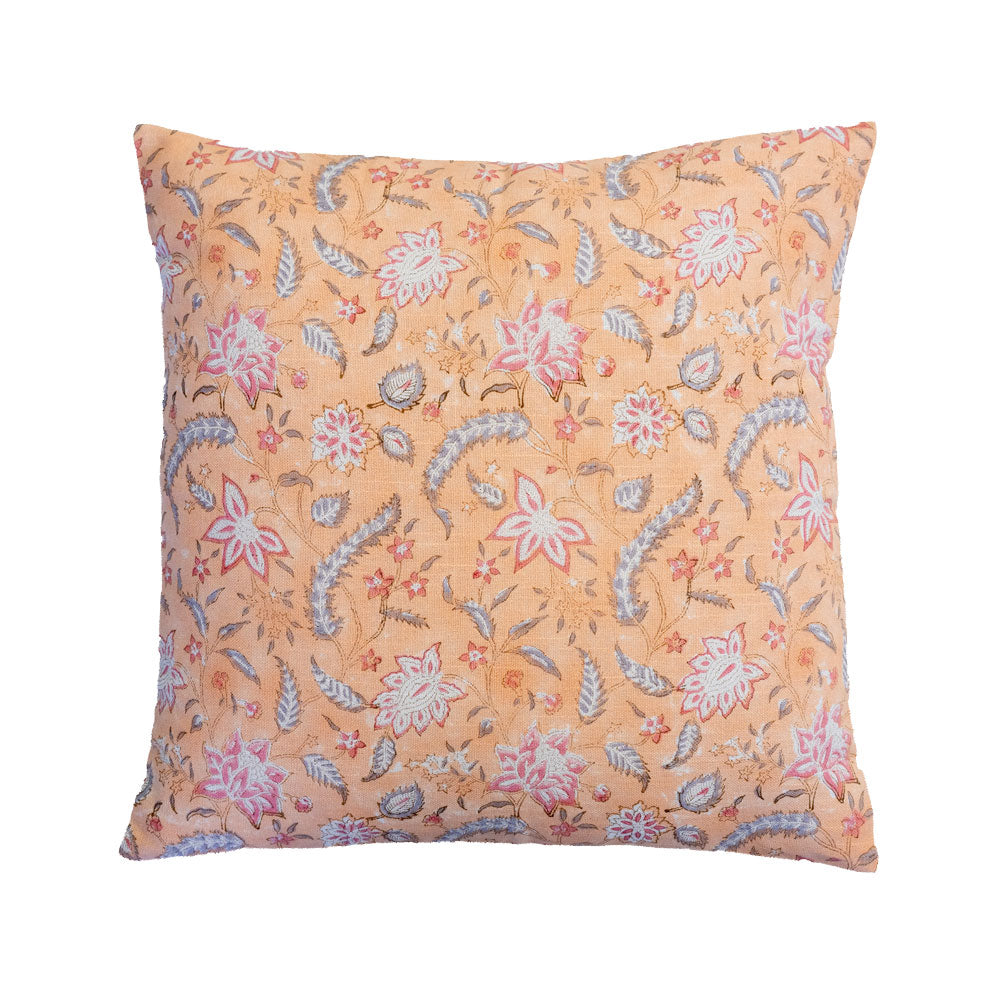
- Kamal Marigold lumbar in front of Seva Teal squares, for warmth and contrast.
- Kiran Pink lumbar with Aranyani Blush squares, for a softer, tonal look.
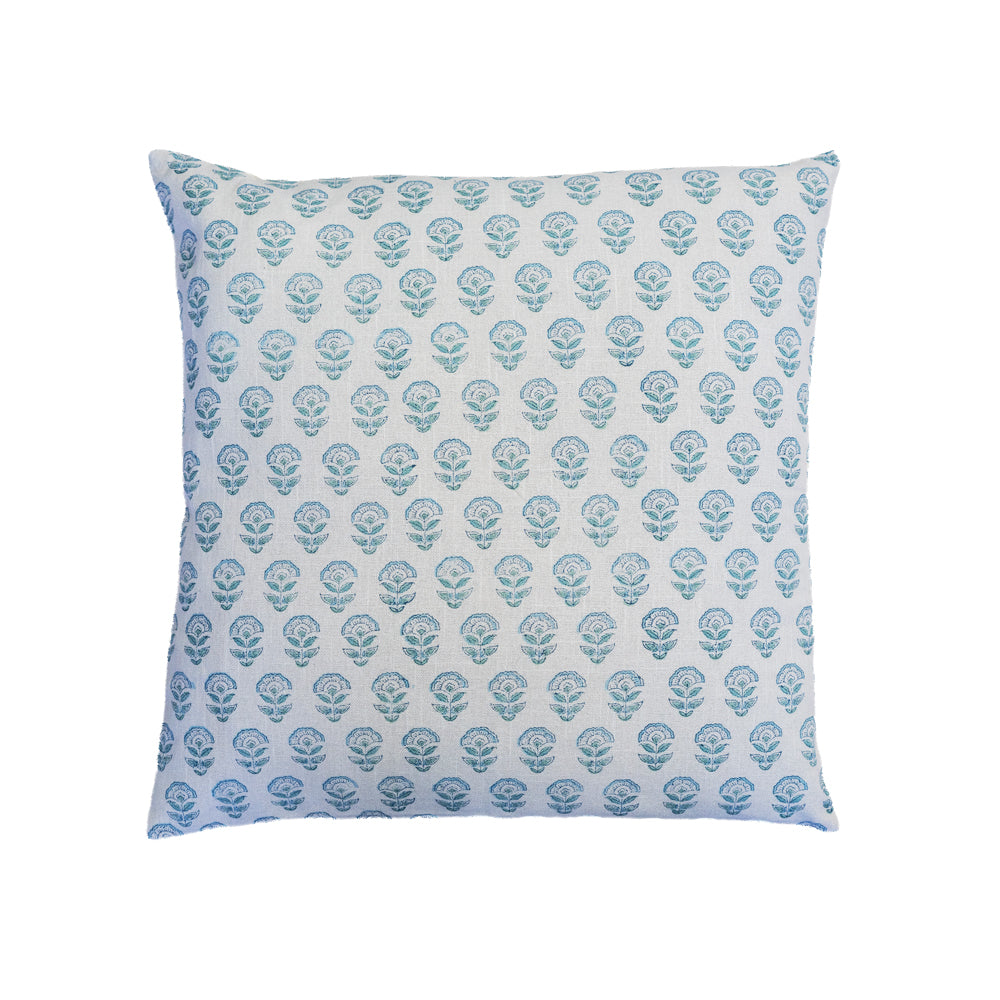
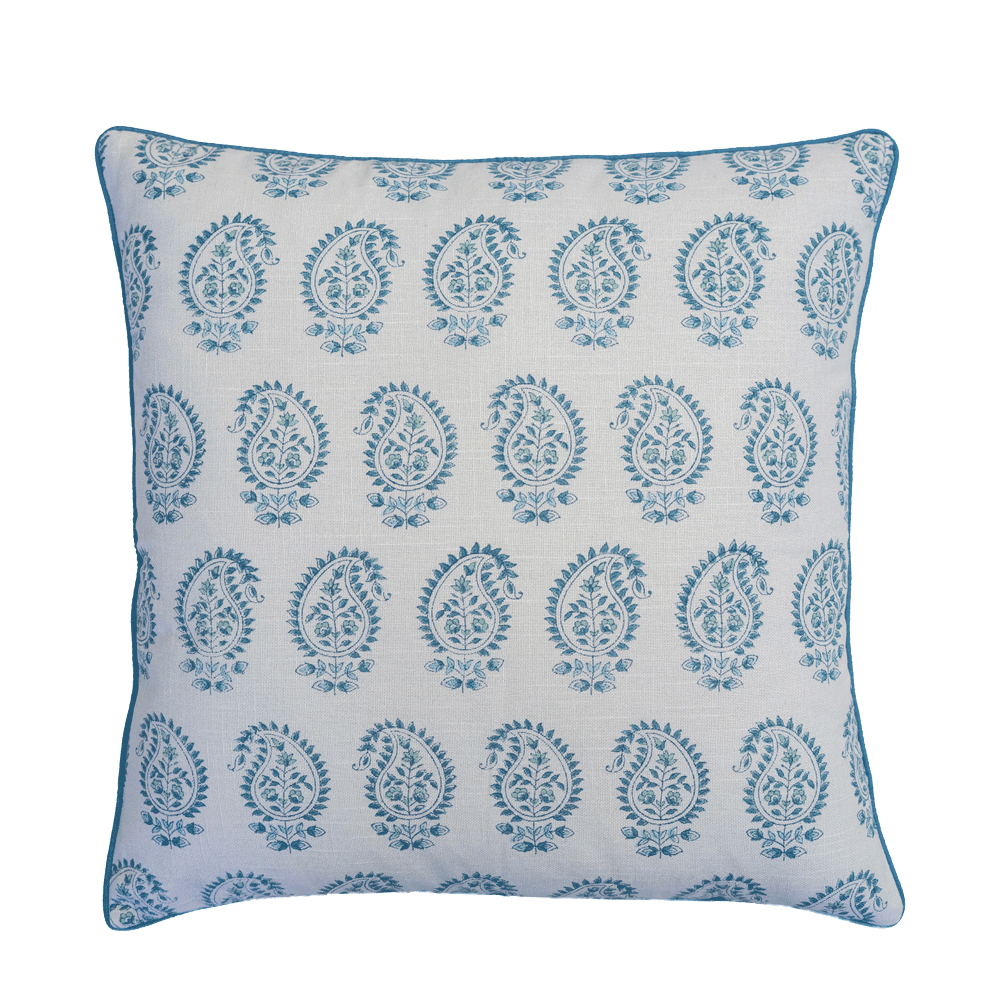
- Kamal Azure lumbar with Amara Blue squares, for a fresh coastal feel.
If you'd rather not work it out yourself, our cushion sets come already paired. For more on choosing prints and fabrics, read The Considered Guide to Cushion Covers.
Insert or cover only?
A lumbar cushion only looks good when it's well filled. An under-stuffed lumbar folds in the middle and slumps forward. A feather or faux feather insert holds its shape and gives that soft "chop" along the top.
All our lumbar cushion covers come as cover only or with a faux feather insert. If you already have a 60 x 40cm insert, the cover alone is all you need. Covers unzip for washing; see our care guide.
Lumbar cushion FAQs
Where do you put a lumbar cushion?
In front of your square cushions, centred, on a sofa or bed. On an armchair, it can sit on its own. It's always the front layer.
How many lumbar cushions should go on a bed?
One on a queen, double or single bed. On a king, one or two, depending on how many squares you use behind them.
What's the difference between a lumbar cushion and a square cushion?
A square cushion is the base layer and gives height. A lumbar is long and low, sits in front, and adds a different shape so the arrangement doesn't look flat. Most rooms look best with both.
Is a lumbar cushion good for back support?
A decorative lumbar cushion gives gentle support on a deep sofa or armchair. For an office chair or car seat, look for a firmer memory foam cushion designed for posture.
Shop our lumbar cushions: hand block-printed on organic cotton, 60 x 40cm, as a cover only or with a faux feather insert.